
Give
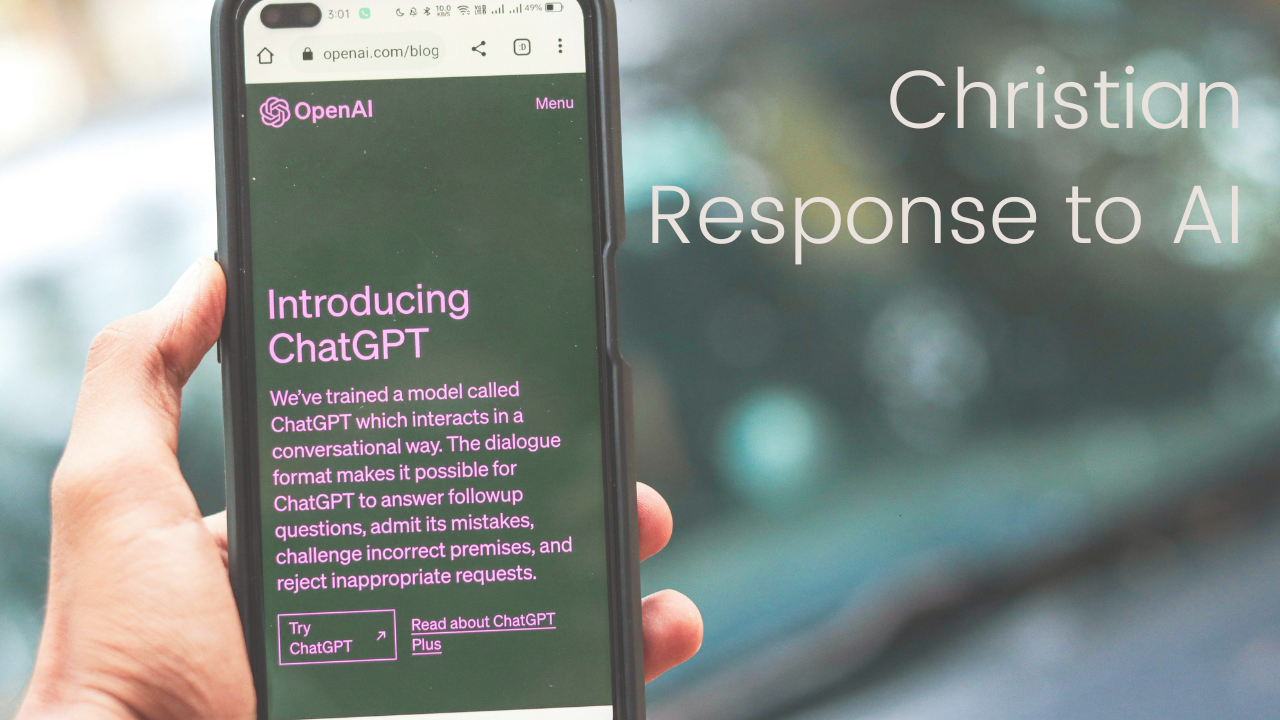
Have you ever woken up and felt like you’re starring in a science fiction novel? Between voice-cloning scams, chatbots that act like therapists, and algorithms that predict our next move, the world is shifting under our feet at a dizzying pace. It’s natural to feel a bit uneasy. When the future feels uncertain, our default reaction is often fear, the fear that our jobs are at risk, our privacy is gone, or that we are losing our grip on what it actually means to be human.
But as followers of Jesus, we don’t have to meet this new era with panic. Instead, we are called to meet it with wisdom. The goal isn’t to run from technology entirely, but to ensure that our digital tools remain just that, tools, while our hearts and minds remain firmly anchored to something much deeper.
We often fall into the trap of thinking our faith only applies to our "church selves." We pray, we sing, we serve, and then we go about our day in the digital world as if Jesus isn't interested in our screen time. But the Apostle Paul gives us a different perspective in Romans 12:1-2. He urges us to offer our entire lives as a "living sacrifice."
This means that every part of our existence, our job, our time, our choices, and yes, even our use of artificial intelligence, must fall under the lordship of Jesus. Before we ask if an AI tool is efficient or if it will save us time, we should first ask: Can this be brought under the authority of Jesus? Does this help me love God and love people better? If a tool is designed to bypass the very things God created us for, like deep thinking, prayer, or authentic presence, we have to hit the brakes.
There’s a massive difference between doing something and being shaped by it. Think of two basketball players. One spends hours in the gym, sweating and practicing until they actually become a better shooter. The other just hits a button on a scoreboard to make it say '100.' At the end of the day, the second person has a result, but they haven't actually grown as a player.
Our world worships efficiency as its highest god. It wants us to take shortcuts. But remember this: the struggle, the patience, and the wrestling are often the very things God uses to form our character. If you use AI to write a sympathetic text to a grieving friend, you might save time, but you lose the chance to offer your own heart. When we outsource our compassion or our repentance to a machine, we slowly become less human and less like Christ. We must resist the urge to trade growth for convenience.
In a world obsessed with 'artificial,' the most radical thing you can do is get back to what is real. Paul tells us to be transformed by the renewing of our minds. This isn't a digital update; it’s an invitation to step away from the noise.
To keep our focus, we need to lean into the simple, ancient practices that remind us who we are:
Silence: Turn off your phone. Seriously, shut it down. Spend time with God without a screen in sight.
Scripture: Wrestle with the Bible yourself. Don't just look for a quick summary or an easy answer. Let the Word of God challenge you.
Face-to-Face: Your chatbot is not your friend. Your friends are your friends. Make space for undistracted, real-life conversation.
Nature: As the psalmist says, the heavens declare the glory of God. Sometimes the best way to reset is to step outside, take a deep breath, and remember that you are a person created by God, not an optimized content engine.
We don't have to be afraid of the future. We belong to the one who is sovereign over all of it. You don't have to shrink back or hide away, but you do need to be intentional. This week, pick one area of your life where you might be leaning too hard on a shortcut. Is it in your communication? Your decision-making? Your study time?
Try stepping away from the screen for an hour today. Spend that time in prayer or in conversation with someone you care about. Remind yourself that you are not a machine; you are a child of God. Let’s commit to living with open eyes, discerning hearts, and a deep, unshakable trust in the One who holds the future.
Watch the full sermon below.


